
Reliable Radial Artery Compression Device: Which One Should You Trust?
2026-09-19
After a transradial procedure, the difference between a smooth recovery and a frustrating bleed often comes down to one small device pressing on the wrist. Yet most teams settle for whatever compression tool is already in the drawer—until it fails. In this article, we dig into what actually makes a radial artery compression device dependable, and whether INT lives up to the claims. If you've ever wondered which device you can genuinely trust when the sheath comes out, read on.
Where Reliability Actually Comes From
Reliability doesn’t spring from a single spec sheet line; it accumulates through unglamorous decisions—component derating, thermal headroom, and the willingness to test beyond nominal conditions. A circuit that works on a mild Tuesday fails in a humid warehouse, so engineers chase those corners early.
It also comes from honest failure data. Every returned unit, logged fault, and torn-down power supply teaches something. Teams that treat field failures as design feedback loops—not customer annoyances—end up with products that outlast the warranty by years.
Finally, reliability is cultural: the technician who torques every screw to spec, the firmware that resets gracefully on brownouts, the buyer who refuses a cheaper capacitor with a shorter life. None of that shows up in a brochure, but it’s exactly what keeps equipment running when nobody’s watching.
Design Choices That Make or Break a Compression Seal
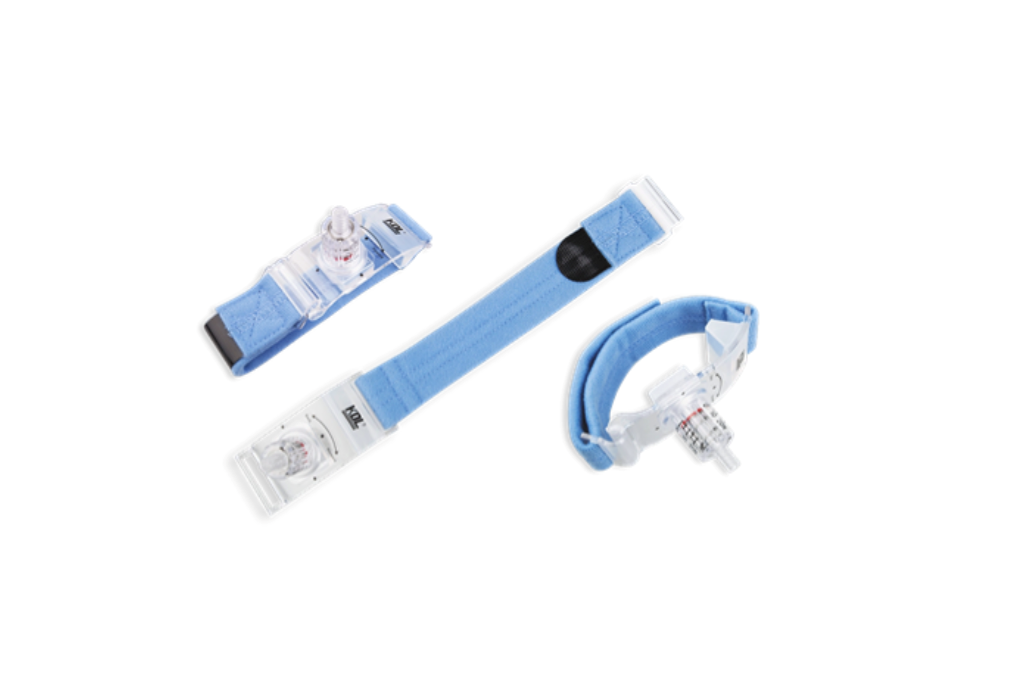
A compression seal lives or dies by the interplay of groove geometry and material hardness. If the groove is too shallow, the elastomer cannot deform enough to fill microscopic surface irregularities; too deep and it extrudes under pressure. Sharp corners invite stress concentration, so radii matter more than most designers expect. Matching the seal's durometer to the expected crush is not a minor detail either, since a compound that is too stiff won't conform and one that is too soft will roll out of position.
Surface finish on mating flanges is another quiet dealbreaker. A mirror-smooth face can actually reduce grip, while a controlled roughness gives the seal something to bite into without creating leak paths. Coatings and platings shift friction behavior, so torque values set for bare metal often fail once a finish changes. Even the direction of machining marks plays a role: radial lines let media escape more easily than concentric ones.
Finally, assembly tolerances decide whether the seal sees uniform squeeze or a lopsided pinch. Fastener spacing, flange flatness, and thermal expansion all move the gap in real time. Designers who treat compression as a single static number overlook the fact that the seal must survive the worst-case stack-up, not the nominal drawing. A robust design specifies the compression range, not just a target, and validates it at both extremes of temperature and bolt load.
Patient Comfort Is More Than a Nice-to-Have
When patients are physically uncomfortable, their bodies react before their minds do. Muscles tense, breathing becomes shallow, and stress hormones rise. That physiological state can interfere with everything from accurate blood pressure readings to a clinician's ability to perform a gentle exam. Comfort isn't an amenity; it's a precondition for reliable care.
Patients remember how they felt long after they forget the details of a procedure. A cold exam table, harsh lighting, or an abrupt transition from waiting room to treatment room can leave a lasting impression of indifference. By contrast, small adjustments—a warmed blanket, a clear explanation, a moment of eye contact—signal that the person matters, not just the condition being treated. That sense of being cared for drives adherence and reduces anxiety on future visits.
Making comfort a priority doesn't require a massive budget. It's about seeing the experience from the patient's side: offering a pillow for support, adjusting the room temperature, or simply asking if they're okay before proceeding. These choices compound over time, shaping how patients talk about their care and whether they return. Comfort, in other words, is where clinical excellence and human connection meet.
Separating Evidence From Sales Claims
Marketing teams love to wrap their pitches in the language of science. A supplement bottle might boast "clinically proven" because one tiny study showed a hint of benefit, while ignoring the three larger trials that found nothing. Sales claims often blur the line between correlation and causation—a classic trick. Just because people who take a certain vitamin report feeling better doesn't mean the vitamin caused the improvement. The placebo effect, lifestyle differences, or plain coincidence can easily explain such patterns. When a sales pitch leans heavily on words like "breakthrough" or "revolutionary," that's usually a red flag, not a guarantee of solid evidence.
A practical way to separate real evidence from sales talk is to ask a few basic questions. Who funded the research? How many participants were involved, and was there a control group? Was the study published in a peer-reviewed journal, or just presented at a trade show? Sales materials rarely mention limitations like small sample sizes or short durations. They also tend to cherry-pick favorable data points while quietly dropping the rest. For example, a skincare ad might highlight a 12-week trial where 8 out of 20 users saw smoother skin, but never mention that the other 12 saw no change or experienced irritation. If the only source of a claim is the company's own website or a sponsored blog, that's not independent evidence—it's advertising.
Developing a habit of healthy skepticism doesn't mean rejecting every product. It simply means recognizing that a testimonial is not a trial, and a before-and-after photo is not a peer-reviewed study. Look for evidence that has been replicated by different research groups over time. Check whether the claim aligns with what established scientific organizations say. If a product's benefits were truly as powerful as the ads suggest, you wouldn't need to dig through fine print to confirm them—the evidence would be widely known and easily verified. Until then, treat extraordinary sales claims as invitations to investigate, not reasons to buy.
The Failure Modes You Won’t Find in the Brochure
Brochures live in a world of steady-state conditions: clean power, moderate temperatures, and loads that never spike. Real equipment rarely gets that luxury. A power supply rated for 500 watts will cheerfully deliver that on a test bench, but pair it with a motor that draws inrush current five times its running value and you’ll start seeing solder joints crack from repeated thermal shock—a failure mode that never appears in the glossy photos.
Some of the most dangerous failures are the ones that only show up when two or three benign conditions overlap. A seal that works fine in dry heat and fine in cold oil may fail within weeks when the two cycle together, because the elastomer loses its plasticizer and becomes brittle. Likewise, a circuit board that passes every bench test can grow tin whiskers in a humid environment with just the right amount of vibration, shorting adjacent traces months after installation.
Manufacturers know about these lurking failure modes, but admitting them would make the product look fragile. So they stay out of the brochure and instead appear in field service reports and warranty claims. If you want to spot them early, watch for the odd clues: a faint clicking that comes and goes, a parameter that drifts slightly before stabilizing, or a relay that occasionally needs a second tap. Those are the brochure’s blind spots telling you the real story.
A Straightforward Way to Pick the Right Device
Most people don't need a feature comparison chart to choose their next phone, laptop, or tablet. They need a simple starting point: think about the one task you do most often. Is it reading long documents? Shooting video? Taking notes by hand? Let that single habit guide the initial shortlist. It sounds obvious, but it prevents the usual trap of being wowed by specs you'll never touch.
Once you have a shortlist, ignore the marketing language and check the physical details. How does the device feel after ten minutes of use? Can you reach the buttons without shifting your grip? Does the screen stay readable near a window or on a train? These small, boring factors matter more than benchmark scores because they show up every single day. A device that feels natural in your hand and works in your usual lighting will get used far more than a technically superior one that constantly asks you to adapt.
Finally, give yourself a cooling-off period. Walk away for a day, then ask: can I picture a normal week with this thing? If the answer is yes without hesitation, buy it. If you keep inventing scenarios where it might shine, it's probably not the right fit. The best device isn't the one with the longest feature list; it's the one that quietly disappears into your routine.
FAQ
You look for two things at once: no bleeding or hematoma at the access site, and continued forward blood flow through the radial artery. The best devices have a transparent window or a pressure indicator that lets you see the puncture site and adjust the volume in small increments. Many experienced operators deflate until a tiny drop of blood appears, then add back just enough air to stop it. That balance is what keeps the artery from occluding.
Basic bands just squeeze the wrist. A good one spreads pressure evenly across a wider surface, requires less air to achieve hemostasis, and lets you visualize the puncture without completely releasing the device. Some designs also include an inflatable bladder with a contoured shape that follows the wrist anatomy. Those small differences matter because excessive focal pressure is exactly what leads to radial artery occlusion and patient pain.
Not really. Terumo's TR Band uses a dual-balloon system and a specific air volume range, while RadiStop has a sliding compression pad and a clip mechanism, and PreludeSYNC uses a syringe-free dial to add air. Each one has a slightly different learning curve and pressure distribution. The clinical choice often comes down to operator familiarity, patient wrist size, and whether you need to recannulate the same artery later.
The main driver is excessive compression. If the device stays too tight for too long, blood flow stops completely, and the artery can clot off. Obesity, small radial diameter, and high-dose anticoagulation increase the risk. A reliable device lets you step down the pressure gradually and check for patency with a reverse Barbeau test. If you cannot reduce pressure without bleeding, the device is not doing its job.
Watch the fingertips for color, capillary refill, and any numbness or tingling. Check the access site for oozing without lifting the whole band. If the device has a clear window, look for blood pooling under the pad. Most protocols call for deflating a set amount every 15 to 30 minutes, but you should always follow the specific device instructions and the operator's order. If the hand turns pale or painful, release pressure immediately.
Not automatically. Pricey features like transparent windows, ergonomic straps, and controlled air release can reduce human error, but the operator's technique still matters more. A cheap band used with a careful stepwise deflation protocol may outperform an expensive band used incorrectly. That said, studies have shown lower radial artery occlusion rates with devices that minimize total compression time and allow easy pressure titration. So cost should be weighed against how often your team uses the device and how familiar they are with it.
Balloon devices like TR Band distribute pressure more uniformly and are easy to fine-tune, but they require an air syringe and careful volume tracking. Mechanical pad devices like RadiStop are quick to apply and adjust with a simple click, but they can create a pressure point if the pad shifts. For a patient with a very small wrist or fragile skin, an inflatable balloon may be gentler. For a busy lab where speed matters, a mechanical pad can be more practical.
Conclusion
Trust in a radial artery compression device rarely comes from the brand name or the slickness of its brochure. What actually matters is whether the mechanical design holds up under real clinical stress—whether the compression pad sits squarely over the puncture site, whether the pressure stays distributed instead of drifting into a single painful point, and whether the strap or frame resists shifting when the patient moves. Patient comfort is not an afterthought; a device that digs into the skin or forces the wrist into an unnatural angle invites fidgeting, which can compromise the seal and turn a routine haemostasis into a slow bleed. The honest way to judge a device is to ignore the marketing adjectives and look for evidence: independent bench tests, published failure rates, and feedback from nurses who have used it on hundreds of wrists, not just a few demo cases. Sales claims about "ergonomic design" or "breathable materials" mean little without data on how often the device loses pressure or needs repositioning.
The failure modes you won't find in a brochure are the ones that matter most: a compression balloon that slowly deflates, a buckle that snaps when the patient flexes, or a transparent window that fogs up so you can't see the puncture site bleeding underneath. These are the realities that separate a dependable tool from a disposable gamble. A straightforward way to pick the right device is to ask three simple questions: Does it allow you to titrate pressure without guesswork? Does it stay put on both slender and obese wrists without constant readjustment? And does it have a track record of low complication rates in registries or independent audits, rather than just in the manufacturer's own white papers? If you can't get clear answers, you're not choosing based on reliability—you're choosing based on hope. And in a cath lab, hope is not a compression strategy.
Contact Us
Contact Person: Jeffrey
Email: [email protected]
Tel/WhatsApp: 86-0633-2230056
Website: https://www.sd-intmedical.com